

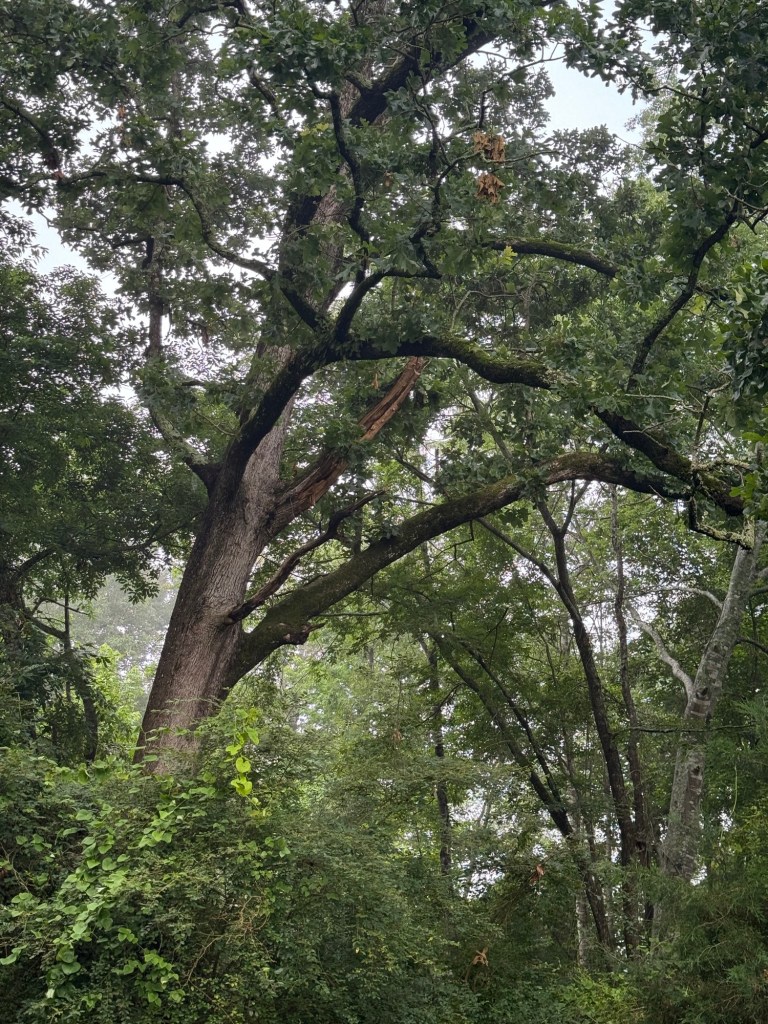
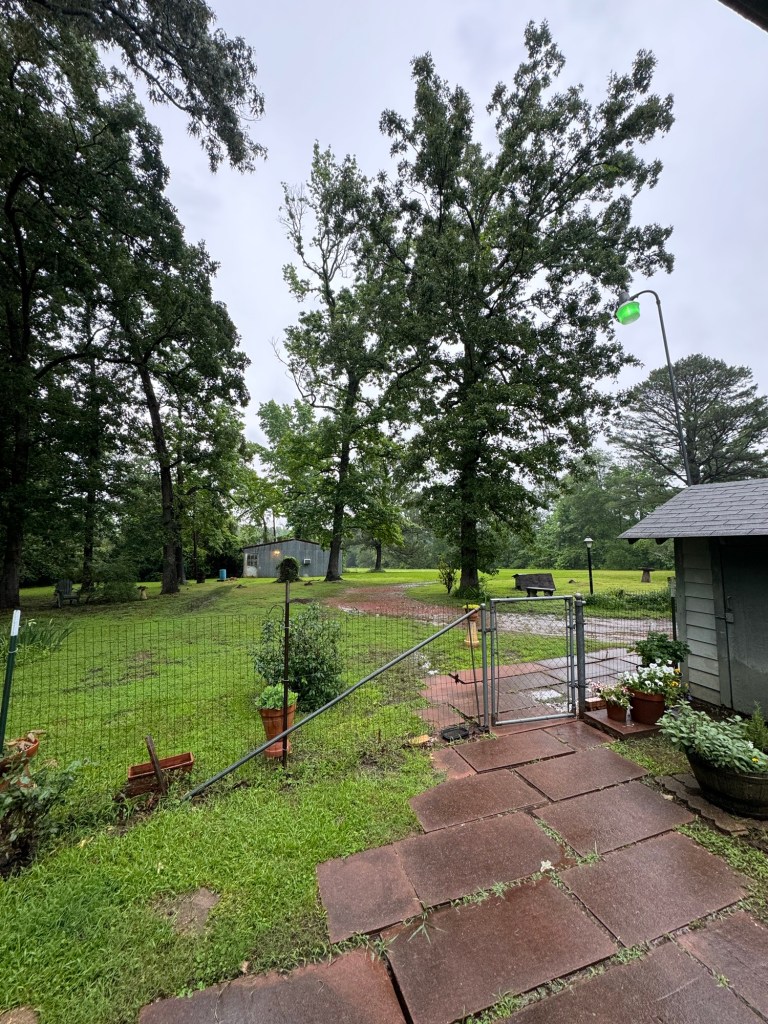
Lately, when I’ve been back home in East Texas visiting my Mom, I’ve found myself engaged in conversations with the trees on her property. Mom lives in my childhood home, a place I’ve known for over fifty years. I’ve known some of these trees for a really long time. Since I was a boy, honestly.
As I walk among them in the morning, my coffee cup in hand, they welcome me. The breeze shuffles through their leaves like whispers. “Welcome home.”“Stay awhile.” “It’s good to see you. How have you been?”

Terri and I lament the increased loss of green space in our suburban city. It seems like the construction is endless.
Like us, trees go through seasons and life cycles consisting of several stages:
- Seedling: A tree begins its life as a seed before germinating into a small seedling. There is a process and a purpose to all life, including the trees that grow around us.
- Sapling: Seedlings grow into saplings, developing their root system and producing their first leaves.
- Young tree: The sapling then grows into a young tree, producing more leaves, branches, and roots.
- Maturation: Over time and through many seasons, young trees reach their mature height developing a strong trunk, branches, and a robust root system throughout the maturing process.
- Maturity: A tree reaches its prime, producing flowers, fruits, or cones, and providing shade, food, and habitat for numerous organisms.
- Decline: As is true with us, trees age and their growth slows. They turn the corner and begin to decline, losing their vigor and productivity.
- Old age: Trees become old, decaying stumps, eventually returning to the soil, completing their life cycle.
A tree’s life cycle varies depending on factors like their species, climate, soil conditions, and other environmental factors. Some trees, like bristlecone pines, live for thousands of years, while others, like cottonwoods, only live for a few decades.
We can identify trees and plants by a number of different characteristics including bark, flowers, fruits and seeds, buds, and twig traits.
The actual scientific study of trees is called dendrology.
On the other hand, a person who studies trees is known as an arborist.
What’s the difference? Glad you asked.
A dendrologist studies trees from an academic perspective while an arborist works with living trees, specializing in their growth and care (LTRC Tree Specialists).




I love stories. A story is what led me to share this reflection on trees. Actually, the story is really more of a poem nestled within a children’s book called “The Giving Tree.” The book is written by the late Shel Silverstein.
“The Giving Tree” beautifully illustrates the life cycle of a tree, highlighting its selfless giving and the passage of time through the lens of an evolving relationship with first a boy, then a man, and finally an old man.
Oddly enough, as I researched this beautiful story, I was surprised to discover that it is highly controversial and very divisive. A sign of the times—or more accurately perhaps —a precursor to our current age.
It reminds me that art is subjective—that’s the double edge sword of creativity. Once you release it to the world, it becomes the world’s. As artists, we get to say what we make. We don’t have say over how the world receives it. And, over time how what we create is received and perceived, changes, like our perspective of a tree we’ve seen a hundred times before or merely observed for the first time in its present life cycle.
In any event, I encourage you to read and understand it for yourself.
Here’s an excerpt of Shel Silverstein’s narrative “The Giving Tree”:
“…And after a long time the boy came back again.
“I am sorry, Boy,” said the tree, “but I have nothing left to give you- My apples are gone.”
“My teeth are too weak for apples,” said the boy.
“My branches are gone,” said the tree.”You cannot swing on them.”
“I am too old to swing on branches,” said the boy.
“My trunk is gone,” said the tree. “You cannot climb.”
“I am too tired to climb,” said the boy.
“I am sorry,” sighed the tree. “I wish that I could give you something… but I have nothing left. I am an old stump. I am sorry…”
“I don’t need very much now,” said the boy, “just a quiet pleace to sit and rest. I am very tired.”
“Well,” said the tree, straightening herself up as much as she could, “Well, an old stump is a good for sitting and resting. Come, Boy, sit down. Sit down and rest.”
And the boy did. And the tree was happy.”
Shel Silverstein – The Giving Tree, 1964.
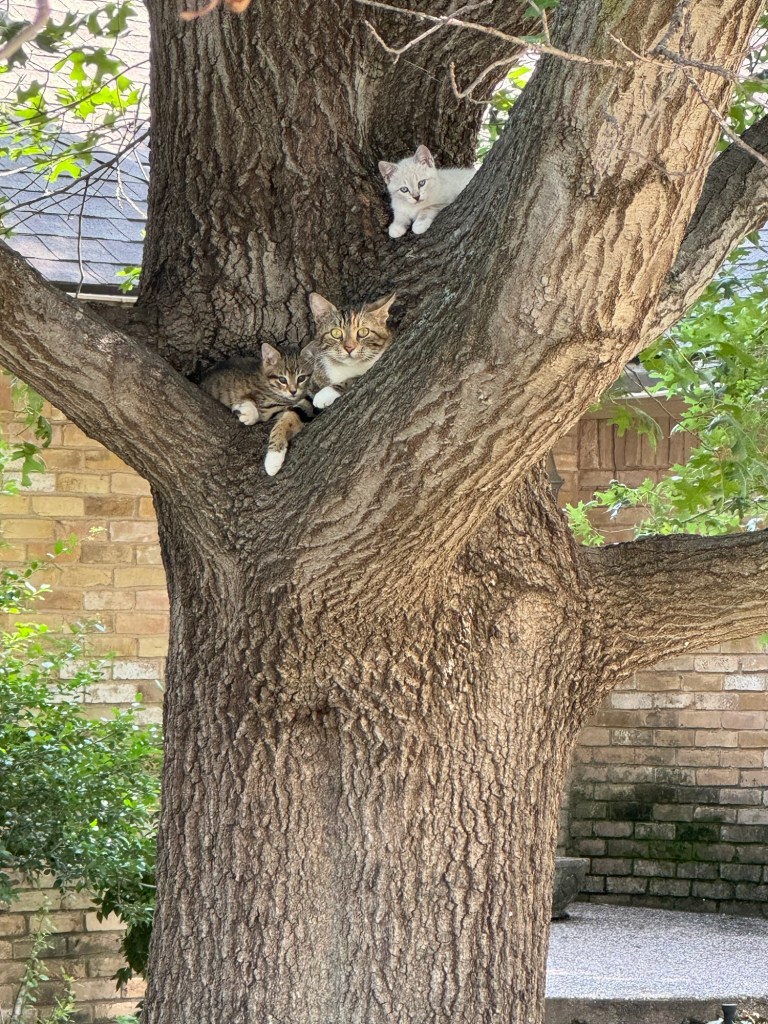
For ever since the world was created, people have seen the earth and sky. Through everything God made, they can clearly see his invisible qualities—his eternal power and divine nature. So they have no excuse for not knowing God.
Romans 1:20 (NLT)
Do you have a favorite childhood story or poem that you’d like to share with us? I look forward to hearing from you in the COMMENTS.
Praying for us.
You are loved.
Rainer Bantau —The Devotional Guy™


 The Devotional Guy™
Indeed. Thanks for reading and sharing your experiences.
LikeLike
Rainer, I enjoyed the journey back to your childhood neighborhood. When I return to Montana to walk around my childhood neighborhood, I find myself reconnecting with small conversations while I walk several of the streets. Re-experiencing these memories invigorates the spirit.
LikeLiked by 1 person