
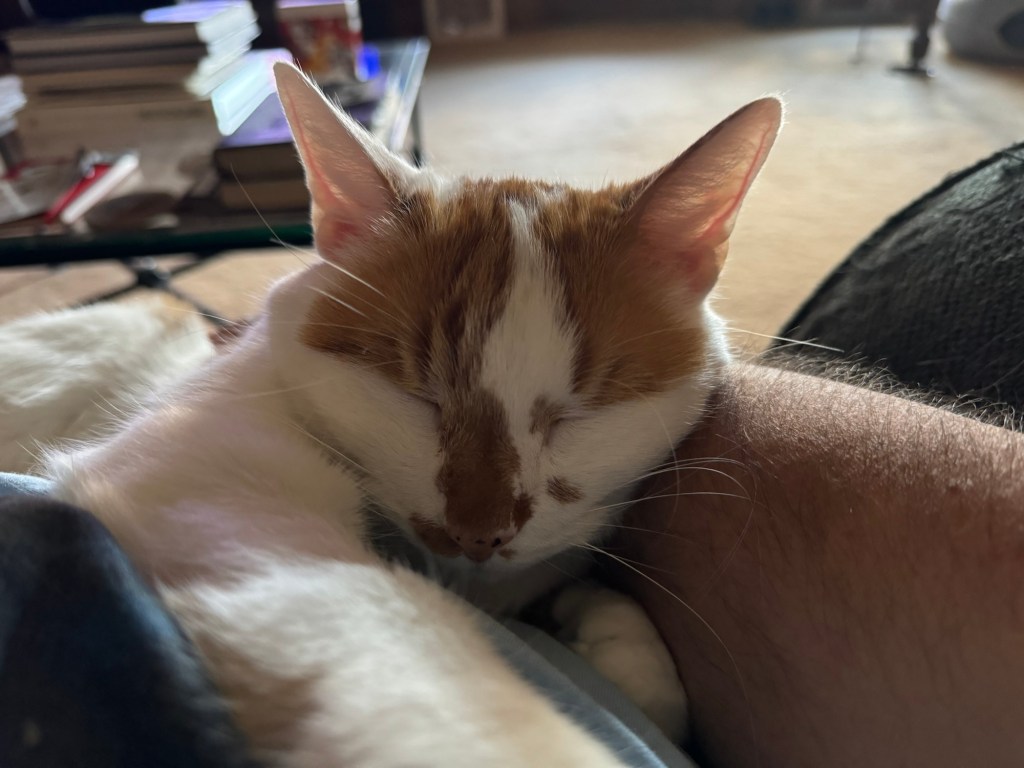
When Terri entered the house from the garage, her voice rang with a cheerful, “Hi Booter!” as Rice greeted her at the door. I shook my head.
“Booter? What’s a Buuder?”
I had waited anxiously for the Whataburger breakfast she had picked up on the way home from the store.
For a brief moment, my mind wandered.
Did Terri convert to Buddhism while grocery shopping?
Probably not—although I wouldn’t put it past Target (pronounced Tar-Jay in the South) to stock enlightenment puzzles next to the Blue Bell ice cream.
Rice had achieved a new level of calm, post-vet several weeks ago. Not that he was ever anxious or unruly. He’s always been pretty chill. Yet, Rice strutted around confidently wearing his badge of honor: a little shaved patch on his leg where they inserted anesthesia for his dental procedure. Thankfully, none of his tiny teeth were pulled—just cleaned. But there he was, proudly bouncing around, as if to say, Yeah, I’m still here, just a little different now.
And just like that, Rice became “Booter” (or “Buuder”), a nickname born not out of logic but out of love. It was a moment that made me reflect on how even the smallest cracks in routine—like a previously unanticipated vet visit—open space for new things to emerge.
In our house, names evolve just like relationships do, each new one stitching another thread into the fabric of daily life. I’m sure you have pet names for your husband or wife. No doubt, you and your friends have nicknames for each other. You’ve got cute names you call your kids or your pets. It’s just who we are; Us’ns and our First World problems.
Nicknames are just one of the many delightful ways animals insert themselves into the rhythms of our lives, molding themselves into our routines and languages. It’s moments like these that remind me how fully they occupy the center of our days, even in ways we don’t always expect—like making sure we slow down enough to notice them, names and all.
All of that diatribe got me thinking about the art of kintsugi, as taught by artist and theologian Makoto Fujimura. In kintsugi—an ancient Japanese practice—broken pottery is repaired with gold, emphasizing the beauty of imperfection rather than concealing it. The cracks become part of the object’s story, making it more valuable because it has been broken and lovingly restored. I recently had the opportunity to hear him speak on this at a conference in Oklahoma City.
Fujimura uses kintsugi as a metaphor for life: the broken parts of our stories are not things to hide, but to honor. In fact, he suggests that these cracks—when seen through the lens of grace—can be where beauty and redemption shine most brightly.

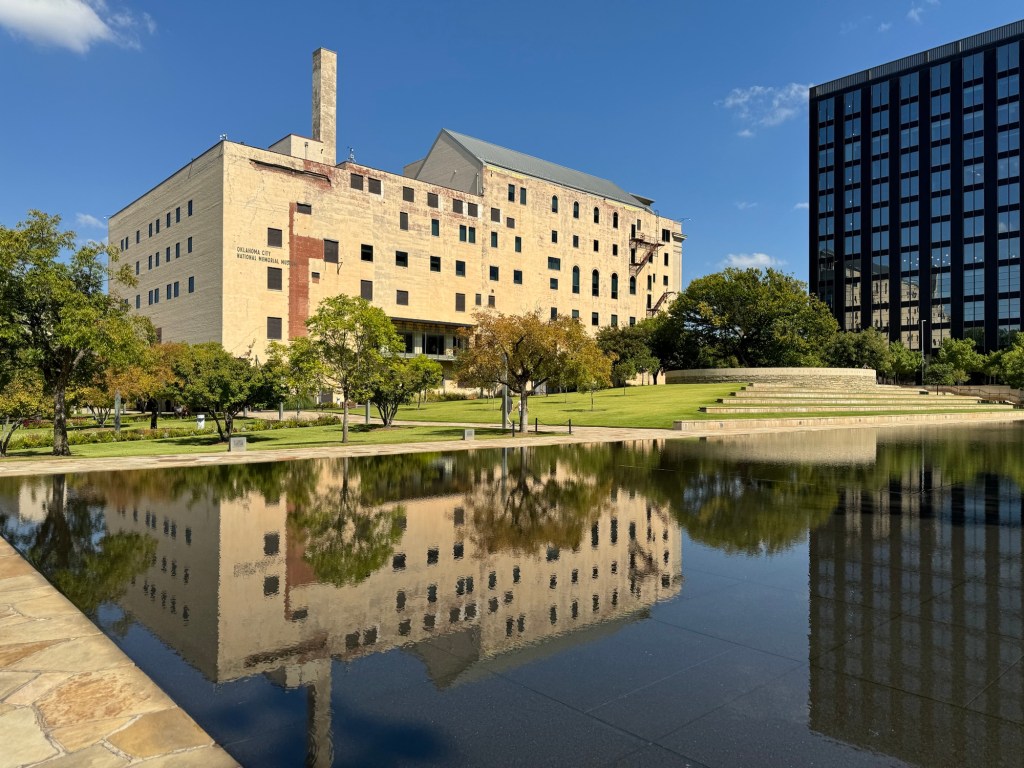
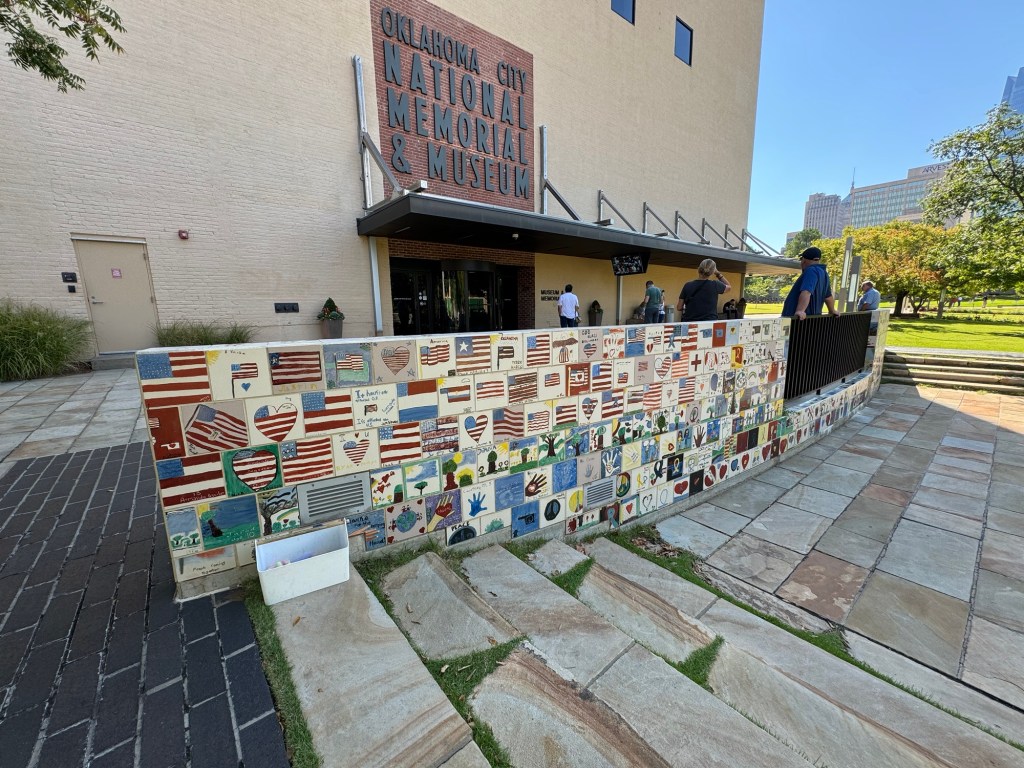
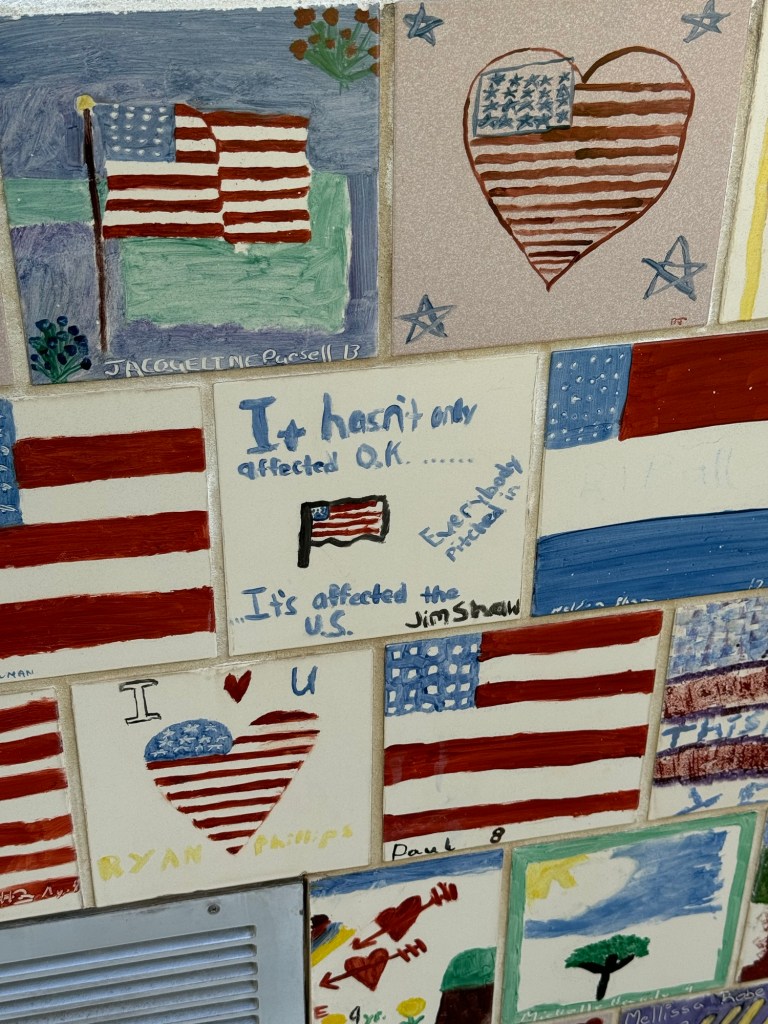
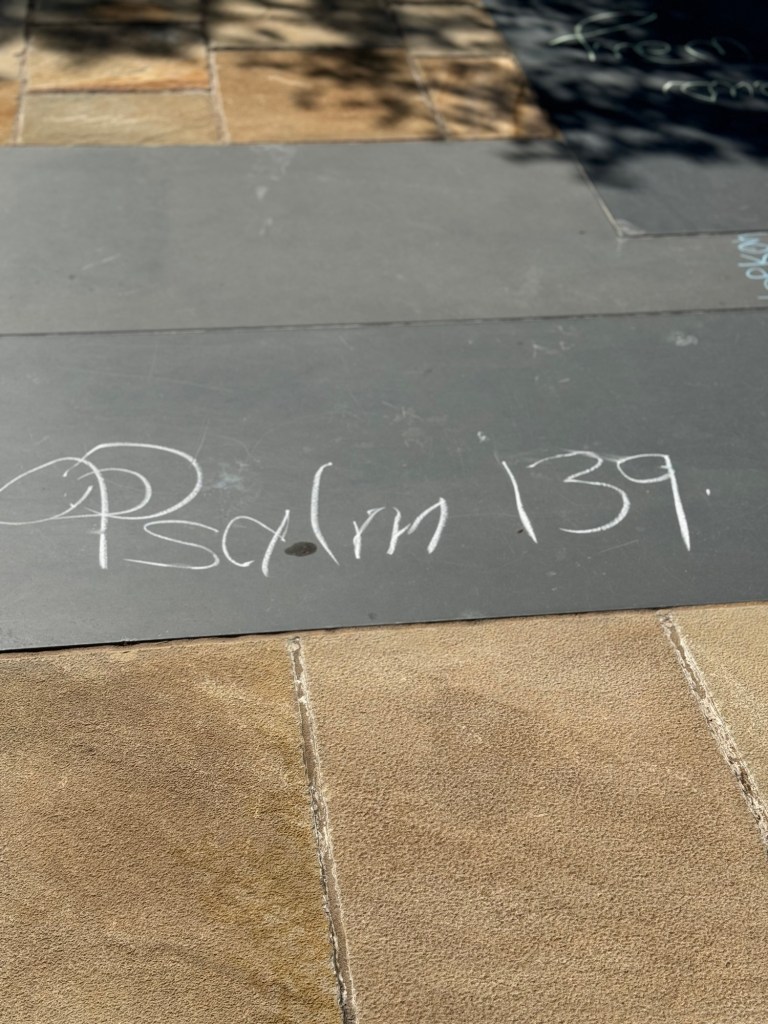
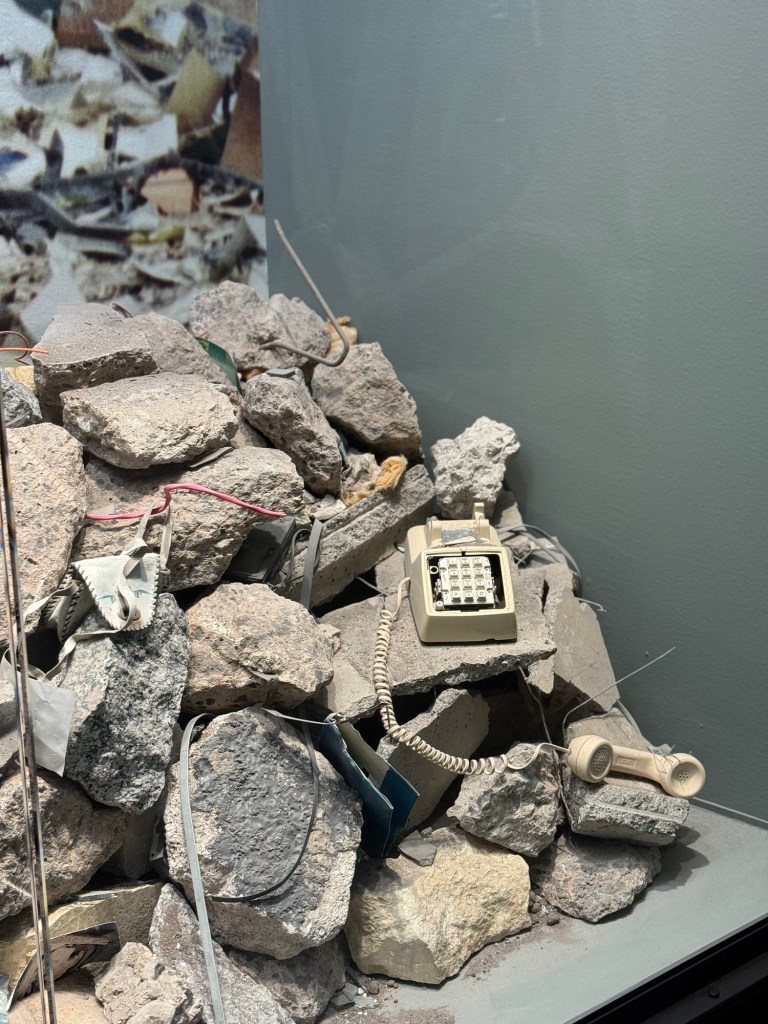
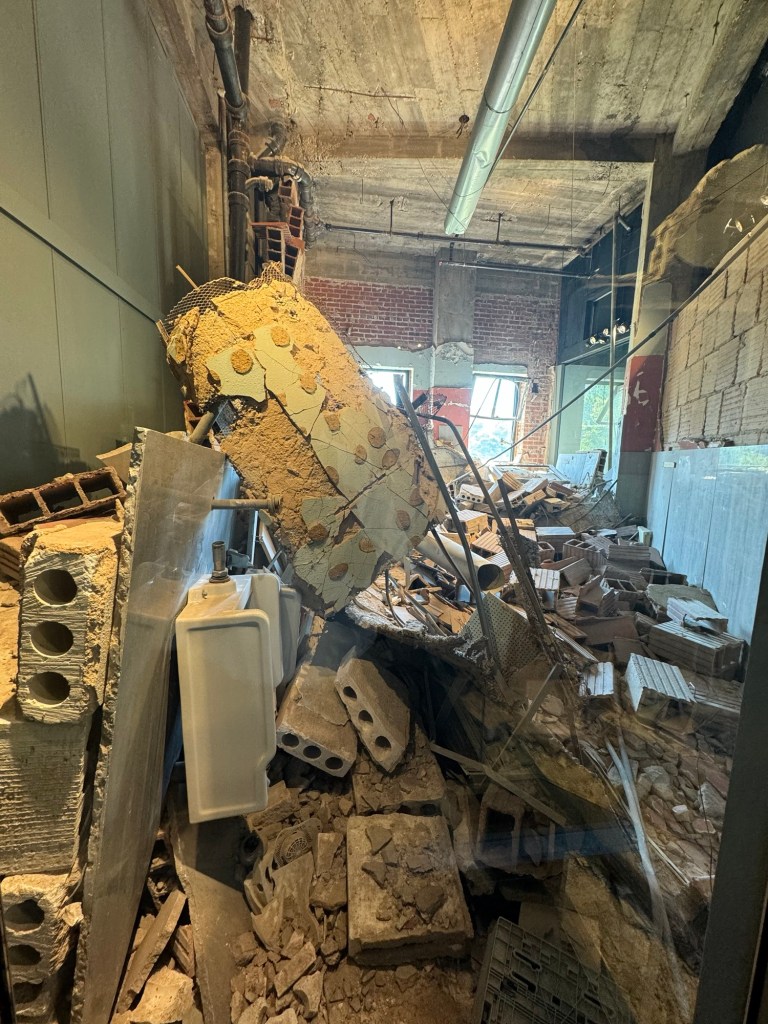
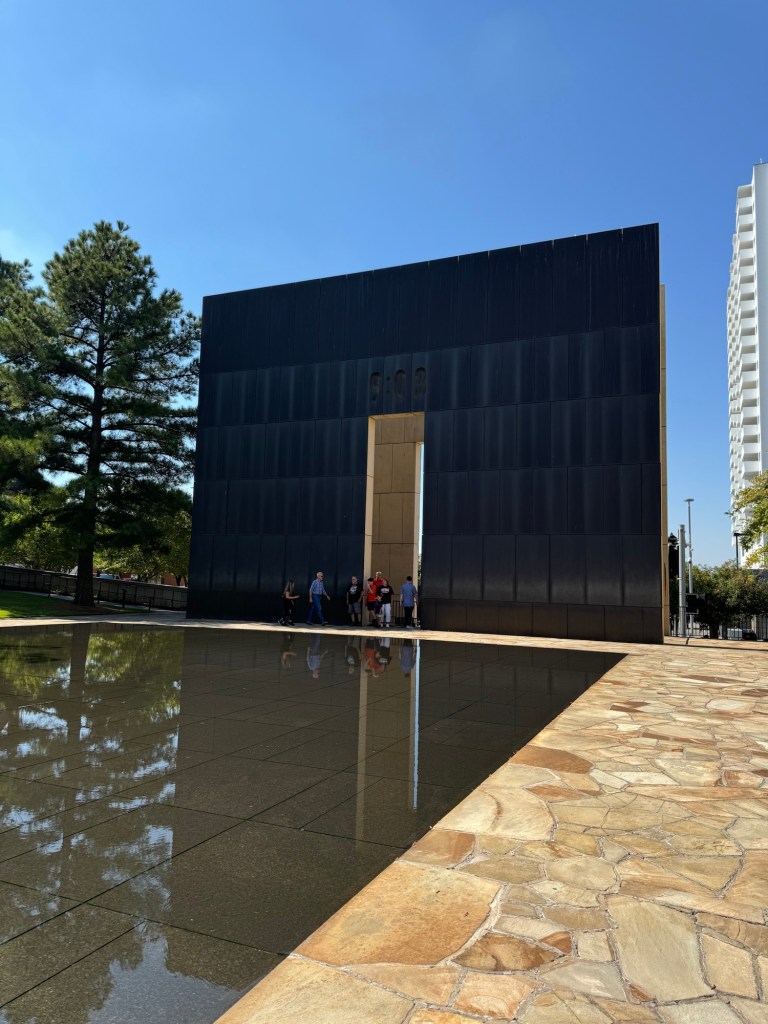
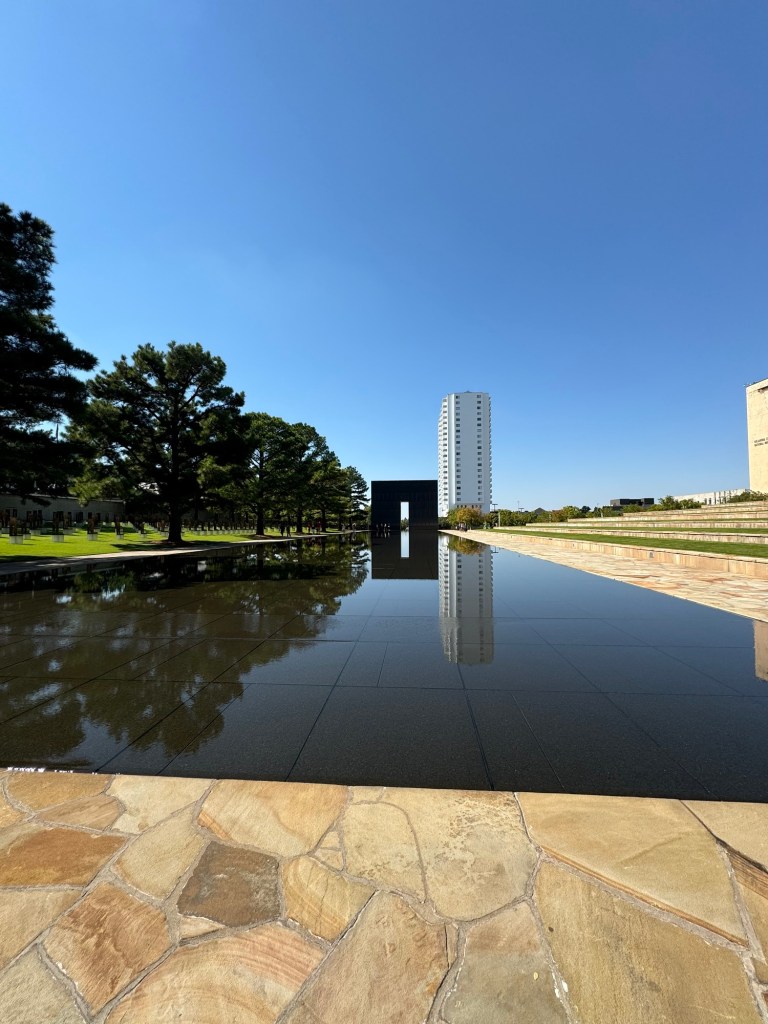
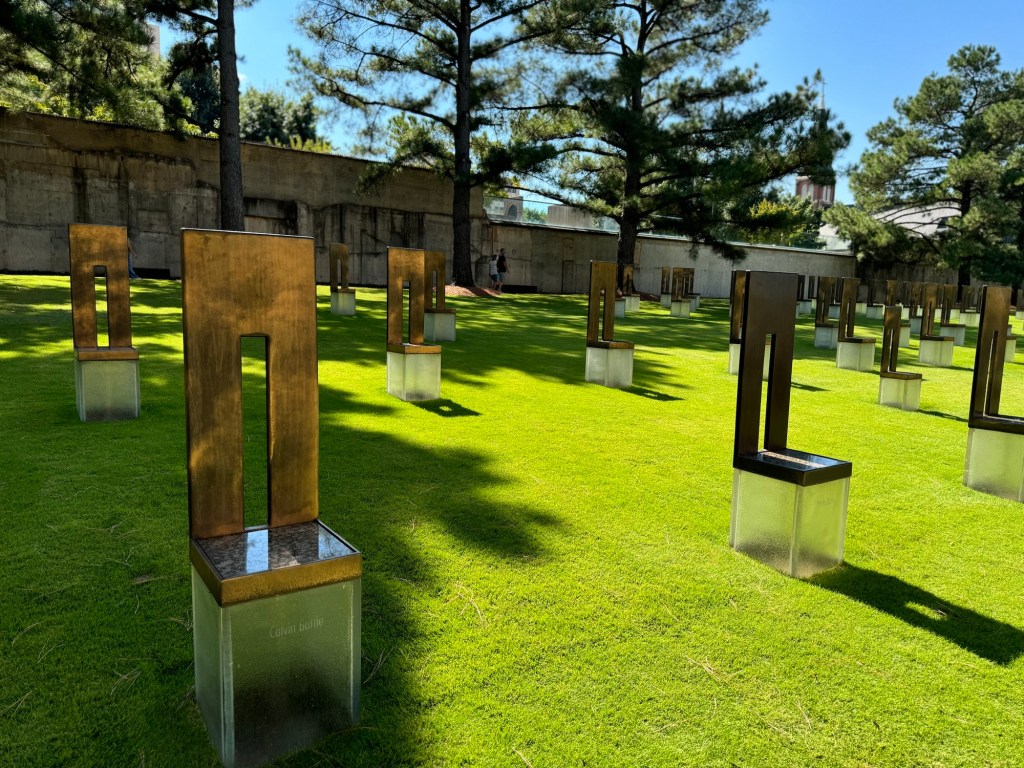
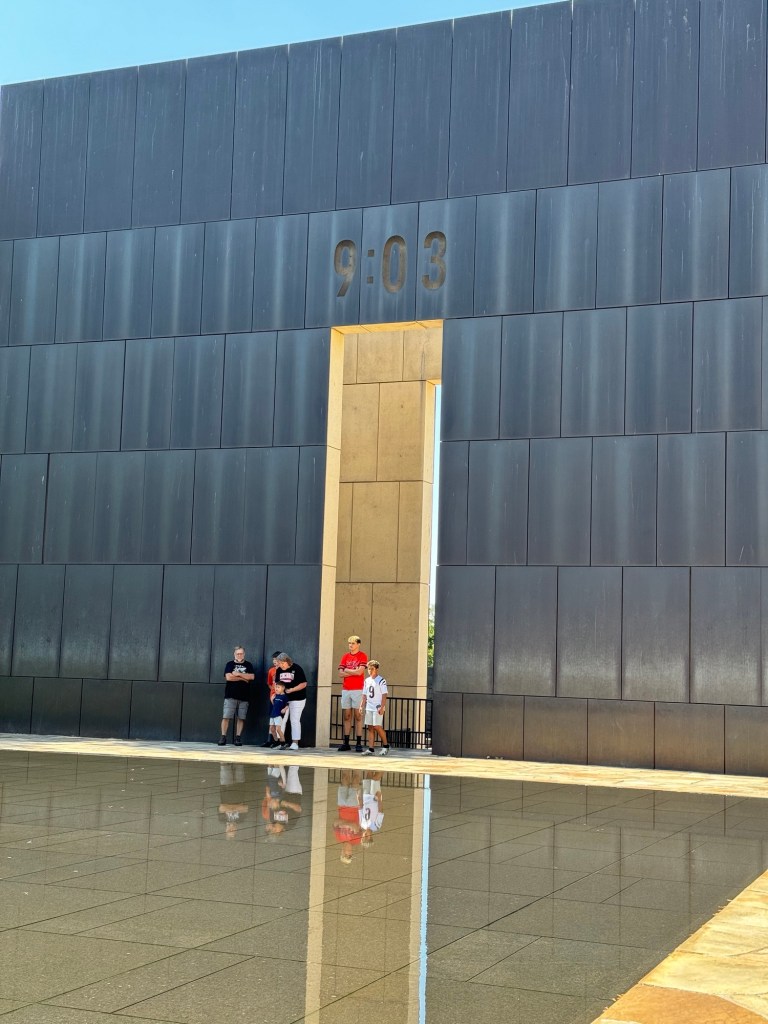
I thought about this as I reflected back on my recent visit to the Oklahoma City Memorial. I was there recently, standing by the Reflecting Pool, facing the haunting bronze chairs that symbolize the lives lost in the horrific 1995 bombing. Each chair marks an absence, someone once here but now gone. Yet, the Memorial itself feels whole. It is not just a place to mourn; it is also a place of healing, where the City’s fractures—both literal and spiritual—have become part of a new story.
7 But we have this treasure in jars of clay to show that this all-surpassing power is from God and not from us. 8 We are hard pressed on every side, but not crushed; perplexed, but not in despair;9 persecuted, but not abandoned; struck down, but not destroyed.
2 Corinthians 4:7-9 NIV
It’s remarkable to think that before the bombing, Oklahoma City was in deep recession, struggling to find its identity. The bombing was a shattering moment—not just for the people but for the city as a whole. And yet, in the years since, OKC has emerged with a renewed spirit. Like kintsugi, the City’s cracks were filled with something sacred: community, resilience, and hope. Oklahoma City is now vibrant and thriving, not because it forgot its brokenness, but because it embraced it as part of its identity.

In the same way, life with our animals—like our cat Rice—reminds me that every crack, every name change, every unexpected vet bill, becomes part of the gold that binds us. Our pets demand our full presence in a way that strips us down to what really matters: to slow down, notice, and love the small moments as they come, imperfections and all.
Rice, aka “Buuder,” has no apparent illusions about being perfect, and maybe that’s the lesson I needed today. Sometimes, it’s the things we don’t plan or polish that make life beautiful: a chipped plate mended with gold, a city reborn from ashes, or a cat with a shaved leg teaching me—once again—how to pay attention.
“I think I’ll start calling him Ugg—like the boots,” Terri muses. Life moves fast around here. Pay attention.
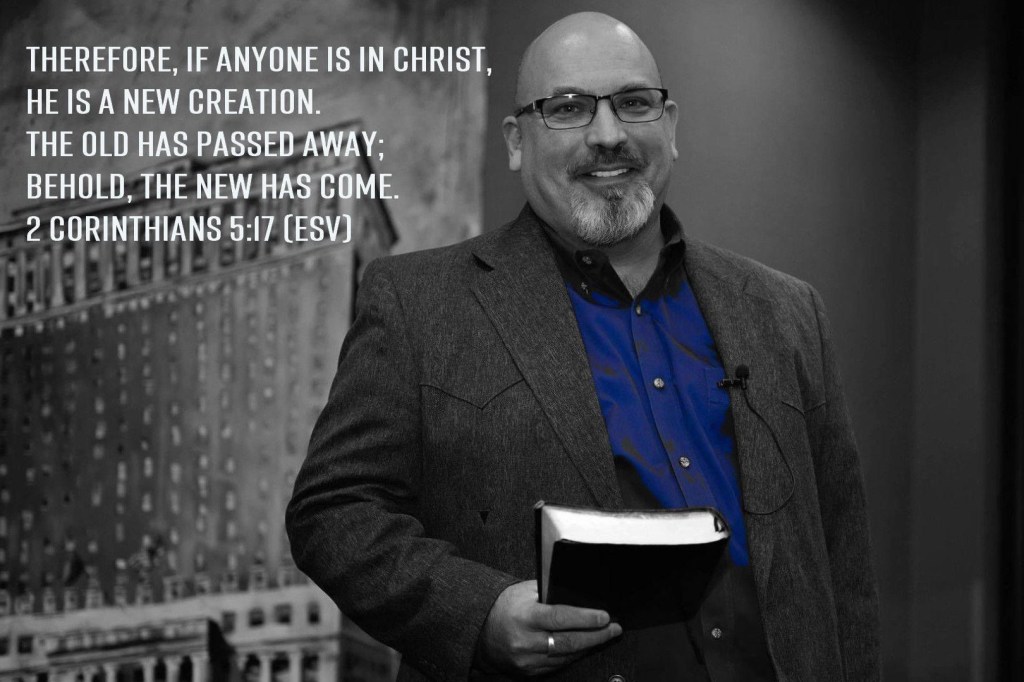
I’ll invite my fellow blogger from Oklahoma, David D, to share his perspective on Oklahoma City and the Memorial, as well as how he has experienced God transforming broken things into new creations.
Until my next post…
Remember:
God is good. All the time.
No matter what.
Know you are loved.
Praying for you. Praying for America.
Let us pray for those among us who are serving in political office. May the Lord bless them with wisdom, discernment, and knowledge of the truth (1 Timothy 2:1-2).
Don’t worry about what’s next. Enjoy what’s now.
Love, peace, and joy,
Rainer Bantau —The Devotional Guy™

#JesusStrong

 The Devotional Guy™
Write on ✊🏻
LikeLiked by 1 person
Thanks, brother. I accept your collaborative invitation. I have my own memories and reflections surrounding the okc bombing memorial.
LikeLiked by 1 person