
You may not realize it yet, but the way we know food is changing.
In a world where the pace of change seems relentless, the way we grow, distribute, and consume food has transformed significantly over the past few decades. This is even more true post-pandemic.
These changes to our food systems impact not only what we eat but also how you and I view the land, our connection to creation, and our responsibility as stewards of God’s earth.
Shifting Fields
Food and agriculture have always served as cornerstones of our human existence. Today, both face challenges and opportunities unlike any other time in history.
Environmental shifts, weather extremes, population growth, and rapid technological advancements are reshaping how food is produced.
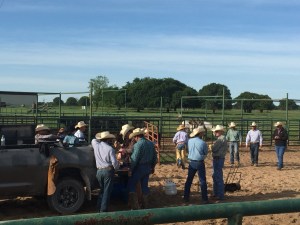
Once the stable of American food production, small family farms have been decimated by uber-efficient industrial farming operations. Farms and ranches have seen machines and algorithms play an increasingly larger role in producing the food humans devour, as hands that tilled the soil for generations and rounded up cattle are quickly becoming relics of the past.
While large-scale production makes food more accessible, it has created a system vulnerable to ecological strain. The soil, water, and air bear the cost of overproduction, leaving us to wonder how we balance the need to feed a growing population of billions while faithfully carrying out the call to care for creation.
The View from the Ground
In my work as part of the homeless ministry, OurCalling, I am responsible for managing food and facilities. We serve about 3,500 meals a week to individuals experiencing homelessness in the streets of Dallas. My work is a humbling role that connects me deeply to the challenges of food production and distribution.
As a result of the pandemic, we witnessed a drastic impact on our food donations. The large-scale donors we relied on were forced to cut back and make changes to how they operate in order to sustain their organizations. Post-pandemic, because of a rampant increase in demand from impoverished families and communities, I saw big-box food operations shift their focus to supplying smaller food pantries. These shifts meant finding new sources for food donations while adding vendors into the mix to ensure we could meet the growing need. While the City of Dallas reports a drop in homelessness, we continue to see more and more people walking through our doors for the first time. At our outreach center, we see more than 80 new people every week (our teams have placed over 1300 people in healthy communities this year alone). All that to say, it’s been challenging to find food to feed people as demand continues increasing. Old paradigms are gone as new solutions are still taking root.
Matthew 25:40 NIV
The King will reply, ‘Truly I tell you, whatever you did for one of the least of these brothers and sisters of mine, you did for me.’

After a lifetime of working in the food industry, this experience has shown me how interconnected our food systems are and how fragile they can be. At the same time, it has reminded me of the power of faith, resourcefulness, and collaboration between people and organizations when we face difficult challenges. Trust me, there are a lot solutions that only came to be because God answered a prayer.
The Rise of Sustainability
Amid these mounting pressures, sustainability serves as a beacon of hope leading to new ways of doing old things. Farmers, ranchers, and food producers are turning to regenerative practices to restore soil health, reduce waste, and limit environmental impact. Urban agriculture, vertical farming, and lab-grown meats are redefining what it means to “farm and ranch.” I see these innovative advancements as a reflection of humanity’s creative response to complex problems while mirroring the ingenuity of the Creator who fashioned the heavens and the earth.
Genesis 1:1 NIV
In the beginning God created the heavens and the earth.
Sustainably isn’t just about technology—it’s also about returning to an ancient truth: creation is a gift to be cared for, not exploited. Scripture reminds us in Genesis 2:15 that God placed Adam in the garden “to work it and take care of it.” I believe this responsibility of “tending to the garden” remains ours, no matter how advanced our farming and ranching techniques evolve.

The Personal Connection
As consumers, we are certainly not exempt from this conversation. Our choices—what we buy, where we shop, and how much we waste—help shape the future of food production.
Some questions to ask ourselves:
- Do we purchase locally whenever possible?
- Do we consider the labor that goes into our meals?
- How mindful are we of those who go without?
Food connects us all.
Every meal is an opportunity to thank God for His provision and to reflect on how we can share it with others. As we give thanks for our daily bread, let us also pray for wisdom—for the farmers, ranchers, scientists, policymakers, and people like me working to meet needs in challenging circumstances.

Faith in Action
The rapidly changing landscape of food production should challenge us to wonder deeply about our values as followers of Christ.
- How do we love our neighbors in a world where hunger persists?
- How do we honor creation while meeting the needs of a growing population?
While these questions don’t have easy answers, they offer us a chance to align our faith with our actions. Whether it’s by intentionally supporting sustainable practices, reducing waste, or simply saying grace before a meal, you and I have the opportunity to play a part in cultivating a world where all people have enough to eat while ensuring that the creation entrusted to us flourishes.
Do the good you want to see in the world.
Rainer Bantau,The Devotional Guy™
May we give thanks for the food on our tables and pray for the courage to be faithful stewards of God’s good gifts.
Until next time…
Grace and peace,
Rainer Bantau—The Devotional Guy™

Sources:
1. Wallace-Wells, David (July 28, 2024) The New York Times. https://www.nytimes.com/2024/07/28/opinion/food-climate-crisis-prices.html
2. OurCalling Website: https://www.ourcalling.org/


Amen 🙏 yes, indeed. The need is always there. I bet that was interesting work, Loring.
LikeLiked by 1 person
Well written. Last half of my retail career was in Grocery. As things continue to change the need remains the same.
LikeLiked by 1 person