
Wow—my recent post, Beloved Believer, What Apps Do You Use to Strengthen and Support Your Faith? really struck a chord. After I published it, it quickly became one of my most read, liked, and commented-on pieces, and I noticed a big bump in traffic right away. Clearly, a lot of us are curious how technology influences our faith journeys.
Given the interest in how faith and technology interact, I am leaning into that by sharing another post focusing on faith and technology. While I am not one hundred percent sure what future posts about faith and technology look like, I am excited about digging deeper into how we navigate this digital world enveloping us while we stay grounded in our faith. I believe that this is an important topic for believers of every ilk everywhere. Obviously, technology can help grow our faith. But, it can also distract us from what matters most.

A sacred hush covers our backyard oasis in the early morning after the neighborhood feral cats are fed and before the suburban traffic picks up. Perhaps, you can relate. It’s that space before your phone buzzes, before anyone needs anything, before the next cycle of to-dos spin their endless demands. It’s the moment and space before all the scrolling starts and emails and texts chime in. It’s quiet. Stillness covers the space and fills your soul.
I sit in that quiet, still space with a cup of coffee and my well-worn Bible, as an attentive soul trying to focus on what matters. Being faithful to that moment is rewarding and refreshing. At least, it can be.

Like you probably do, most days, I wake up into a world already humming and spinning into action. Or at least I did. Now, during my healing sabbatical focused on recovering from the effects of persistent stress and trauma, I’m not as readily pulled into the whirl by a flood of notifications. But, I know for many of you reading this post—even those of you who are of an older generation—notifications pull you in before you’ve even offered a morning prayer. The screen quickly becomes our sanctuary—and not in a good way.
We live in a world designed for distraction. Our attention economy thrives on keeping our focus fragmented. “Look here! No, look here!,” it bellows. The fear of missing out distracts from slowing down and leaning in to listen to God. Our faith, which so often grows in stillness and slowness, is forced to compete with the fast and the flashy; the salacious and obscene.
God is not absent from the digital.
In Acts 17:28, Scripture tells us “In Him we live and move and have our being.” That includes our online lives. The Holy Spirit isn’t scared off by our technology. However, our digital lives can distract us l from our sacred spaces, pulling us away from His presence.
How do we reclaim sacred space in this wired world?
We don’t do it by rejecting technology outright and we certainly don’t do it l by romanticizing the past. Life was not better before we discovered fire. The invention of the wheel improved lives. It didn’t make them worse.
As a pseudo sports fanatic, it’s real easy for me to turn on ESPN’s Get Up! or Stephen A. Smith. As a lifelong news junkie, I can watch Good Day Fox 4 or scroll through the latest headlines of the Dallas Express.
Growing up in rural East Texas, I had a front row seat to the battles between the sanctity of religion and the demons of technology. When our high school math teacher dared to introduce a computer class as an elective, he nearly got hung in the square and burned at the stake. It was as if the boogeyman had jumped out of the dark recesses of the underworld. Oh vey, Galileo!

Incorporating technology into our lives while remaining steadfast in our faith means asking better questions and living with deeper intention.
Here are some questions I find myself asking lately:
- Where is God in my daily scroll?
What voices am I letting shape my soul? Who am I listening to before I’ve listened to Him? Is someone speaking into my life before and more than the Lord? - What does sacred space look like for me right now?
This is hard, at first. It might mean a phone-free morning routine—a digital Sabbath once a week, or semi-silent retreat. X. Sacred doesn’t always mean silent—it just means set apart. But, during my healing sabbatical, I’ve discovered the benefits of silence and solitude. - How can I use technology to reflect the image of God?
Creativity, connection, compassion are divine traits. The tools aren’t the problem. As is usually true, the problem lies in our heart. It’s not innovation that’s the issue; it’s how we use it.
Faith and technology aren’t enemies. That’s right. Faith, technology, and yes—science, are companions that complement each other—or at least they can if we are willing to let them. Our human tendencies cause us to employ them in ways that God never intended.
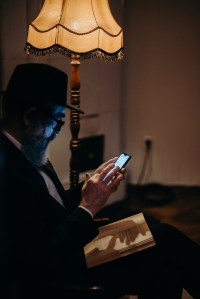
Technology and faith do ask us to make choices. Faith asks us to be more than consumers of content. We are God-wired to become creators of meaning. Reflecting God’s image means we are designed to be digital pilgrims—not tourists—moving with purpose through the world, both physical and virtual.
My hope is that in future posts we can explore what it means to live faithfully and thoughtfully in this digital age—from distraction and discipleship to ethics and expression. I certainly don’t have all the answers. I am no tech savant, but I do think of myself as tech savvy. I have more questions than answers along with a few stories to share. I also cling to the deep belief that sacred space is still possible and readily available if we choose to find it and carve out time to experience it.
God is present in everything, everywhere.
Even here.
Even now.
Even online.

Thanks for reading my post. Please feel free to share your thoughts and insights in the comments.
Be salty, stay lit.
Rainer Bantau —The Devotional Guy™


#bgbg2#BibleGateway
The Stigma Stops Here.🛑
#mentalhealthmatters

 The Devotional Guy™
I do digital fasts organically because I enjoy other activities like watching baseball! But usually I limit my online time to the morning, after Bible devotion time and breakfast until lunch. If I’m in a big writing mood I may go back and write in the afternoon but won’t log into anything. It’s not hard for me because I get bored easily online! I think mindfully adding physical stuff to each day helps.
LikeLiked by 1 person
That’s a great plan, Dana. Do you also do digital fasts? What is your screen time limit per day and how did you arrive at it? Was it hard to get started? (Sorry about all the questions!) Thanks in advance for sharing!
LikeLiked by 1 person
I limit my daily screen time and intentionally incorporate off-line activities like reading physical books or doing something crafty.
LikeLiked by 1 person
Thanks for your input, Dana. How do you see that playing out in your life and in the lives of others who you know? For me, I’m finding I need to be more intentional about carving out space, putting my phone down, etc. I appreciate you reading and sharing.
LikeLiked by 1 person
I agree, distraction is the key. It is hard to listen to that still, small voice if we are always scrolling.
LikeLiked by 1 person