

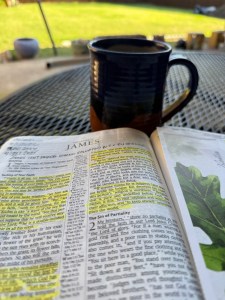
The Word of God, the Holy Bible, is rich in metaphors and figurative language. As we read its pages, we discover that the Bible’s many writers employ metaphorical expressions to help convey deeper spiritual truths and to illustrate complex concepts in a way that remains both engaging and understandable.
Throughout the Psalms, we can find various metaphors that describe God’s nature and relationship with His people. For example, Psalm 23 begins with, “The LORD is my shepherd; I shall not want.” By employing this metaphor, David illustrates God’s care, guidance, and wisdom by comparing Him metaphorically to a shepherd. Like a shepherd who looks after his sheep, God looks after His creation.
Metaphors enhance the richness of the text by helping readers explore deep spiritual insights.
What is a Metaphor?
A metaphor is a figure of speech where one thing is described in terms of another to highlight a similarity between them, even though they’re not literally the same.
Instead of saying something is like something else (that would be a simile), a metaphor says it is something else.
Let’s look at some examples:
“Time is a thief.” Time doesn’t literally steal, but the metaphor expresses how time takes things away.
“Her voice was music to his ears.” Her voice isn’t literally music, but the comparison conveys its pleasantness.
Metaphors are powerful tools in writing, art, and everyday speech because they let us understand abstract or complex ideas through relating it to something more familiar.
©2025 Rainer Bantau
All Rights Reserved
Jesus Used Metaphors to Teach Spiritual Truths
From reading Scripture, we know that Jesus often used simple stories with profound meanings, called parables, to communicate His teachings.
We clearly see this in the Parable of the Sower, where the seed represents the Word of God being received in different ways depending on the condition of the heart (Matthew 13:1-23).
Jesus frequently employed metaphors in His teachings to convey profound spiritual truths in relatable ways. Let’s look at a few more notable examples.
The Light of the World
Jesus said, “I am the light of the world. Whoever follows me will never walk in darkness, but will have the light of life” (John 8:12). In this metaphor, light represents truth, guidance, and the presence of God, contrasting with darkness, which symbolizes sin and ignorance.
The Good Shepherd
In John 10:11, Jesus states, “I am the good shepherd. The good shepherd lays down his life for the sheep.” Here, Jesus uses the metaphor of a shepherd to illustrate His care and sacrifice for humanity, portraying Himself as one who protects and nurtures His followers.
The Vine and the Branches
Jesus declares in John 15:5, “I am the vine; you are the branches. If you remain in me and I in you, you will bear much fruit; apart from me you can do nothing.” In this metaphor, the vine represents Jesus, while believers are the branches. It emphasizes the importance of remaining connected to Him for spiritual growth and productivity.
The Salt of the Earth
In Matthew 5:13, Jesus says, “You are the salt of the earth. But if the salt loses its saltiness, how can it be made salty again?” Salt here symbolizes influence and preservation, indicating that His followers are called to have a positive impact on the world.
The Mustard Seed
In Matthew 13:31-32, Jesus compares the kingdom of heaven to a mustard seed, stating, “Though it is the smallest of all seeds, yet when it grows, it is the largest of garden plants.” This metaphor illustrates how something small can grow into something significant, reflecting the nature of faith and the growth of God’s kingdom.
All of these metaphors invite us into deeper reflection and understanding, helping us to grasp spiritual truths in a more tangible way.
The Use of Metaphors in Therapy
If you’ve read my blog for awhile, you probably know that earlier this year, my therapist diagnosed me with post traumatic stress disorder (PTSD) and complicated bereavement caused by persistent destabilizing events that negatively impacted my wellbeing.
Metaphors are actually significant tools used in therapy, especially when a therapist is working with someone suffering from PTSD and complicated bereavement, because trauma and grief are often very overwhelming, confusing, and hard to put into plain words.
Metaphors Make the Unspeakable Speakable
I’ve learned that experiencing trauma and navigating deep grief often leave us without the words to adequately express what we are going through. During these intense life moments, it can simply be hard to express our feelings. Thankfully, metaphors provide a safe means of expressing something deeply raw.
- “It feels like I’m carrying a backpack full of bricks everywhere I go.”
- “It’s like I’m stuck in a storm that never ends.”
Metaphors serve as a bridge between overwhelming emotions and language, making our experience shareable and understandable.
Metaphors Externalize Our Pain
Metaphors can help separate the person from the trauma or grief, so they’re not defined by it.
Instead of “I’m broken,” a therapist might guide someone to reframe: “It’s like my heart has a deep scar, but scars mean healing has begun.” This brings about a paradigm shift that reduces shame and opens a path toward recovery.
Metaphors Help Us Normalize and Validate What We’re Going Through
A well-chosen metaphor reassures people they’re not “crazy” for how they feel.
PTSD flashbacks can be explained as your body’s alarm system being stuck on high alert, even when the danger has passed.
Grief waves can be described as tides of the ocean that you don’t control when they come, but you can learn how to float when they hit.
Metaphors Guide the Healing Process
I’ve learned that therapists often use metaphors as roadmaps for growth:
PTSD: Recovery is like learning to drive again after a car wreck—you start slow, cautious, but eventually, you trust the road again.
Complex bereavement: Grief is a journey through a wilderness—you won’t always be lost, but you have to keep walking to find your way out.
Gratefully, metaphors help us make the intangible tangible. They help us navigate PTSD and complicated bereavement in a way that helps us to frame, understand, and express our experience in a way that moves us toward healing.
Metaphors Create Space for Hope
Metaphors carry images of resilience, survival, and transformation. For example:
- “Your trauma is a fire that burned you, but now you’re forging into something stronger, like steel.”
- “Grief is like winter that feels endless, but spring does come.”
Do you have a particular metaphor or parable in mind? If so feel free to share it in the COMMENTS so we can reflect on it together!

Until my next post…
Be salty, stay lit.
Rainer Bantau —The Devotional Guy™


#bgbg2#BibleGateway
The Stigma Stops Here.🛑
#mentalhealthmatters

 The Devotional Guy™
Thanks for reading, Richard.
LikeLiked by 1 person
Well done Rainier. This post witnesses to the Christ’s light of wisdom, which faith trusts us to embrace. Your chosen Scripture illustrations bring out worthy metaphors. I searched my journal for a recent post, which reads a bit like a metaphor: The Lord’s grace always stands ready to help us declutter the negative stuff in our life’s journey. (I think this was inspired from one of your recent posts.)
LikeLiked by 1 person
Thanks!
LikeLiked by 1 person
Nicely put sir!
LikeLiked by 1 person
I get it. Coffee is the fuel for words.
LikeLiked by 1 person
I tried to come up with a clever metaphor for a reply, but I don’t think I’ve had enough coffee yet!
LikeLiked by 1 person
I’ve grown rather fond of metaphors the past nine months. I love the “If it’s in the chord…” metaphor. As far as I know, it’s the first time I heard it. Blessings to you and your bride today!
LikeLiked by 1 person
Excellent, brother. I coined a metaphor one night during a church choir rehearsal. Us guys were having a hard time finding our parts and I said, “If it’s in the chord, it’s from the Lord.” In other words, if you’re making harmony with the music, it’s going to sound just fine–whether you sing ink (notes on the page) or not. I’m likely not the first person to ever say, “If it’s in the chord…” but it fit that night, and local musicians now say it and attribute it to me, and I humbly say, “I’m just the messenger.”🤗 Blessings, my brother!
LikeLiked by 2 people